

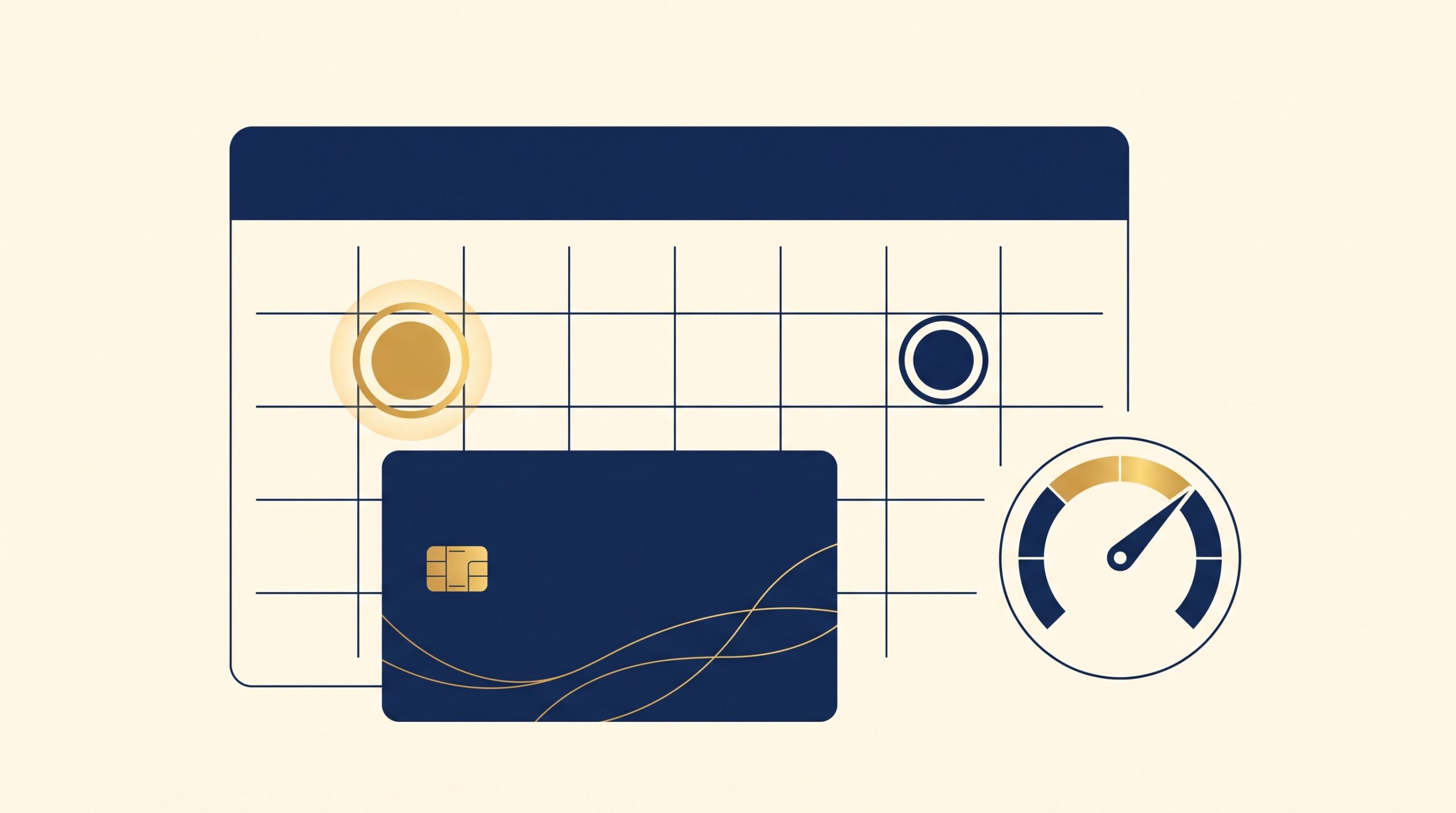
Most people believe their credit card balance is reported to the bureaus when their payment is due. It is not. It is reported when your statement closes, and that difference is worth more points than almost anything else you can do in a single month.
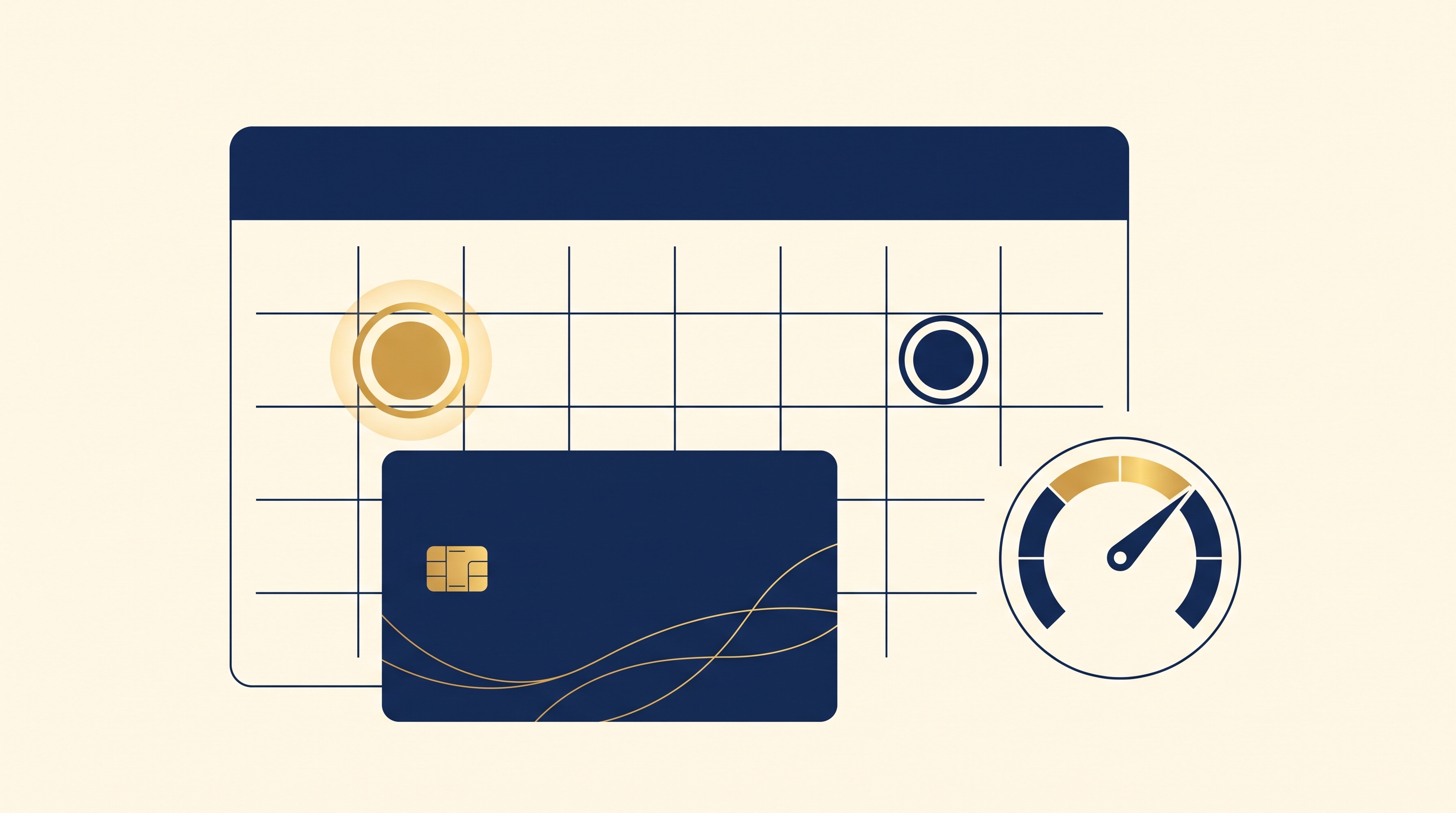
The two dates on every credit card
Every card has a statement closing date and a payment due date, usually around three weeks apart. The closing date ends your billing cycle. Whatever balance you carry at that moment is the figure your issuer sends to Equifax, Experian, and TransUnion. The due date is simply the deadline to avoid interest and a late mark.
Credit scoring models never see your due date. They see the balance that was reported on the closing date, divided by your credit limit. That ratio is your credit utilization, and it accounts for roughly 30% of a FICO score.
Why paying in full is not enough
Consider someone with a $5,000 limit who charges $4,000 a month and pays the balance in full, every month, without fail. They carry no debt and pay no interest.
Their report still shows 80% utilization, because the statement closed while $4,000 was sitting on the card. To a lender, that file looks like someone running close to their limit. Paying in full protects you from interest. Paying before the statement closes protects your score. They are different actions on different dates.
How to fix it in one billing cycle
- Find each card’s statement closing date. It is printed on the statement and usually one tap into the mobile app. Write them all on one page.
- Pay the balance down a few days before that date, not before the due date.
- Aim for under 30% as a floor, under 10% to compete, on every individual card as well as overall. One maxed card hurts even when your total looks healthy.
- Ask for a credit limit increase. A higher limit lowers utilization without you paying anything. Many issuers will do it with a soft pull after six months of clean history.
- Pay the remainder by the due date as normal to avoid interest.
Utilization has no memory. It is recalculated from whatever was reported this month, so the gain shows up in the next reporting cycle rather than over years. Nothing else in credit moves that quickly.
The zero-balance nuance
Reporting $0 on every card is very slightly worse than reporting a small balance on one, because the model wants evidence you are actively using credit responsibly. A common approach is to let one card report between one and nine per cent and everything else report zero.
The difference is small. Don’t let it distract you from getting from 70% down to 10%, where the real points are.
Before a big application
If you’re applying for a mortgage or auto loan, run this a full month ahead. Reported balances lag by a cycle, so a payment made the week before you apply may not be reflected in the file the lender pulls.
Utilization is the fastest lever you control, but it is one of five scoring factors, and it will not help if inaccurate negative items are still sitting on your report. The DIY Credit Repair & Credit Score Blueprint covers both halves: eleven chapters on removing inaccurate items under the FCRA, then eight on rebuilding the score, with five fill-in dispute letters and a 90-day action plan.
This article is educational and is not legal or financial advice. No specific credit score outcome is promised or guaranteed.
Related reading: What Is Date of First Delinquency (DOFD)?